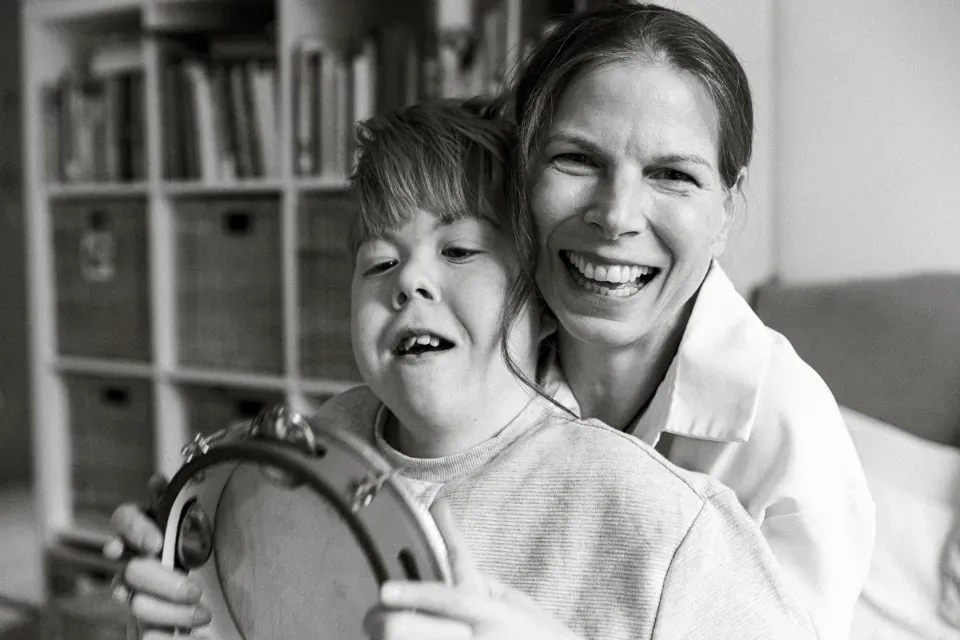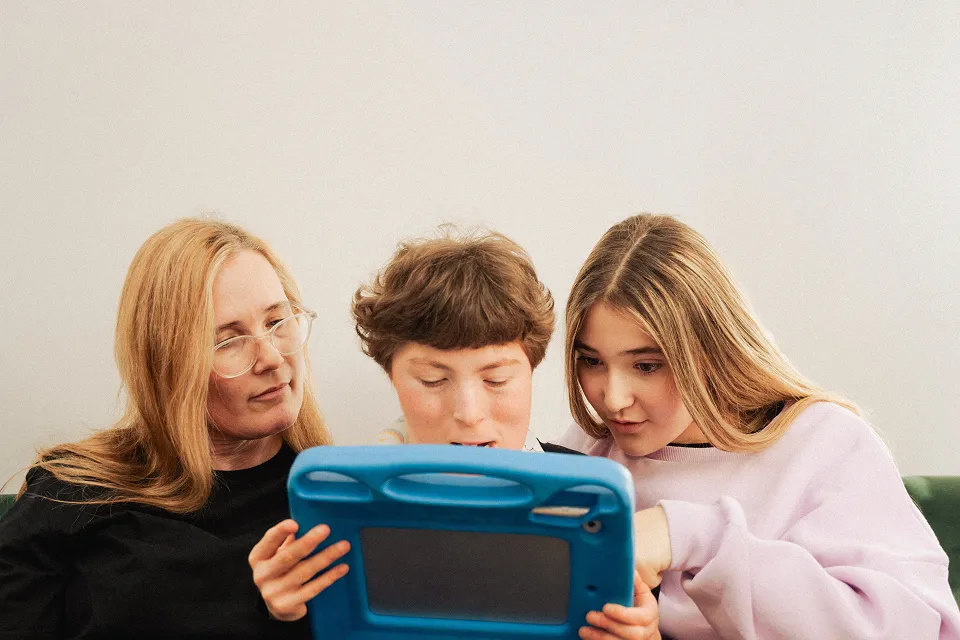
Many UK users can clearly express what they want with their talker, but reach their limits when it comes to performing digital actions themselves. This is exactly where our research project "Selbst.verständlich" comes in.
Our research project “Selbst.verständlich”: Understanding communication, enabling independence
“I ask Dad with my talker: “What’s the weather going to be like?” And then Dad checks the weather app. But why do I need Dad for that? I want to be able to access the weather app myself.”
Many people who use alternative and augmentative communication (AAC) are familiar with such situations. The talker works during conversation. Wishes, questions and decisions can be expressed. But as soon as it comes to initiating digital actions, independence often ends abruptly. Whether checking the weather, scheduling an appointment, playing music or looking something up online: communication takes place via the talker, but the action is almost always performed by another person.
This is precisely where our new research project comes in. We want to understand in which everyday situations people use assisted communication to actually trigger a digital action, and when they fail to do so because the appropriate technical interfaces are lacking. Not because the intention is unclear, but because our digital systems are not yet designed to translate AAC-based communication directly into actions.
Research with the community
A key component of the project is an ethnographic study. This means that we accompany AAC users in their everyday lives and observe them using their talkers closely. The research is conducted in co-design with AAC users, their relatives and carers, and specialists in assisted communication, linguistics and technology.
Are you interested in our project?
Then sign up for our newsletter and stay up to date on progress, insights and results!